



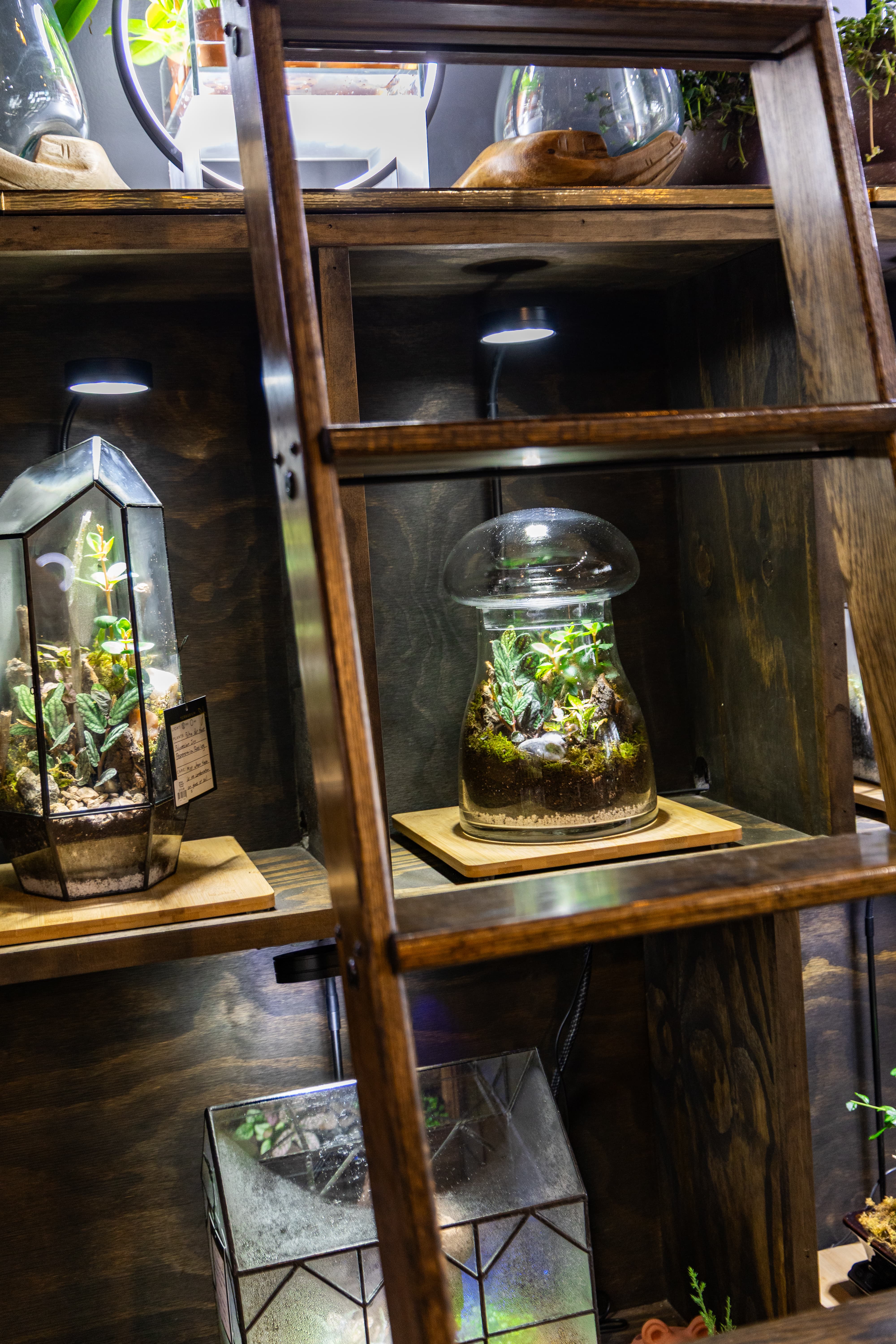
A terrarium is a tiny, sealed weather system
Water that evaporates from the soil and the plants has nowhere to go in a sealed terrarium. It condenses on the glass, drips back down, and cycles through again. A little fog on the walls in the morning is normal. A terrarium that stays completely fogged all day, or drips visibly down the inside of the glass, is telling you there's too much water in the system.
Reading the condensation
Clear glass with maybe a light morning haze means the balance is right. Heavy, persistent fog means it's too wet: open the lid for a few hours to let some moisture out, and hold off on the next watering longer than you think you should. Bone-dry glass with no haze at all, especially paired with shrinking moss, means the opposite: it's time to mist.
You're not watering on a schedule. You're watching the glass and adjusting.
Airflow matters more than people expect
A terrarium that's sealed too tightly, too often, is where algae shows up first: that green film on the glass and on the soil surface thrives in still, damp, low-airflow conditions. Cracking the lid for an hour every few days lets fresh air exchange happen without drying the whole thing out, and it's usually enough to keep algae from taking hold.
If algae's already there
Wipe the glass with a soft cloth or a cotton swab on a stick for tighter spots, cut back watering, and increase airflow for a week or two. Established terrariums usually recover fully; it's rarely worth tearing one down over a green film that a drier week will clear up.